

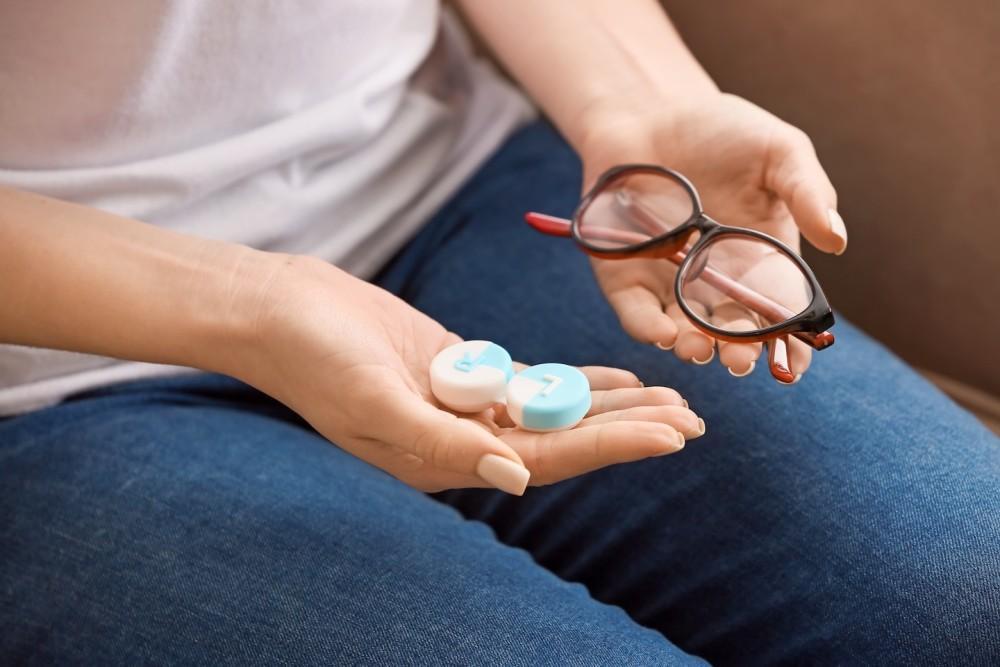
Switching to Contact Lenses: 6 Tips for Beginners
You’re getting contact lenses for the first time; it’s an adjustment you’re happy to make. Read more about six essential guidelines that can keep your eyes infection-free.

If you want to stay healthy and have diabetes, it requires you to keep your blood sugar under control. That can be challenging. Stores and social gatherings are full of unhealthy fast foods and ultra-processed foods. If you’re not careful, a busy schedule can lead you to make poor food choices when you’re hungry.
Having diabetes means you’re at risk for other health complications. Diabetes not only affects your heart and circulatory system, but can also affect your eyes. Keep up with your regular eye appointments; it's nonnegotiable.
Our board-certified ophthalmologists and optometrist at Wolchok Eye Associates, PA, are your partners in your eye health. If you experience blurry vision, difficulty reading, or see distorted lines, call our office right away. You could have macular edema.
Your eyes contain several components that work together to help you see clearly. The macula, part of the retina at the back of your eye, controls your central vision — what you can see straight ahead.
When you have diabetes, macular edema can result from high blood sugar. Over time, elevated blood sugar damages blood vessels in your eye. The blood vessels, which carry oxygen and important nutrients, can begin to leak and swell, causing macular edema.
Age-related macular degeneration and uveitis, inflammation in the middle of your eye, can also cause macular edema.
Take proactive steps to control macular edema by following these healthy lifestyle habits to help keep your blood sugar under control:
Track your A1C. It helps you monitor your blood sugar and keep it under control.
You likely already have a blood pressure cuff. Use it daily or as needed to keep your blood pressure at safe levels.
While red meat tastes good and contains protein, it also elevates inflammation. If you’re a meat lover, try to cut back on how often you eat it. Substitute fish or chicken. Follow the Mediterranean diet, which focuses on fruits and vegetables, fish, olive oil, nuts and seeds, and whole grains like oats and quinoa. Cook with olive oil instead of seed oils like corn or soybean oil.
Lower the sodium in your diet. A high-salt diet raises your blood pressure, which can damage the blood vessels in your eye. Check out low-sodium cookbooks and learn to use healthy spices to season your food.
With so much health information in the news, you already know the benefits of regular exercise. If you’re a couch potato, make a plan and set goals. Start with a daily walk, no matter how short, and increase your distance over time.
Did you know stress can raise your glucose level? Try daily meditation or deep breathing several times a day. Make a long-term plan to eliminate major stressors in your life.
Making these adjustments can go a long way toward extending your health as you age. Call Wolchok Eye Associates, PA, to ensure your eye health today.


